
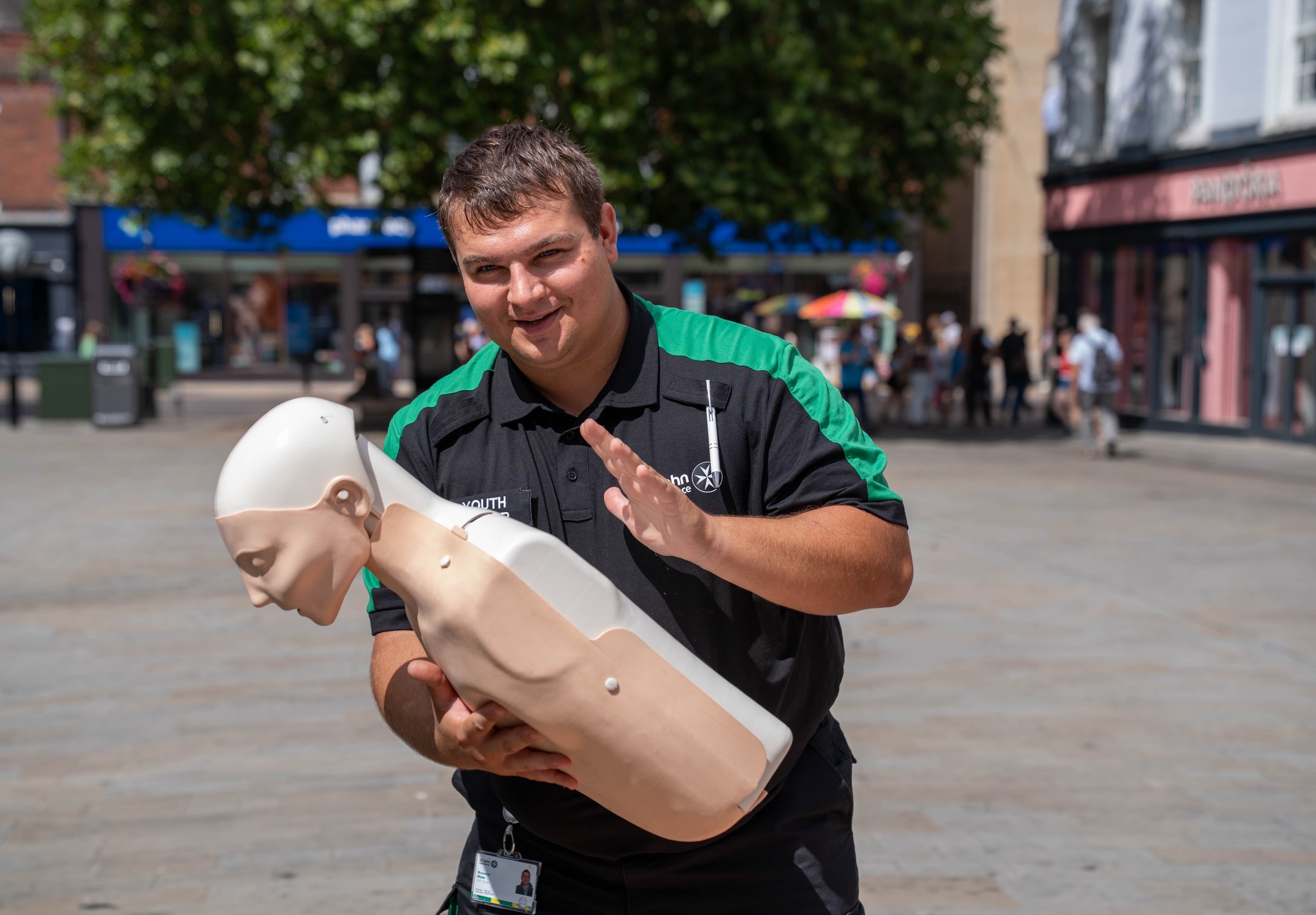
The charity aims to teach at least 500,000 people first aid skills during its 2026 campaign.
St John Ambulance is providing public demonstrations, online videos and first aid advice throughout September.
The charity says people should know how to respond if someone is choking, how to perform CPR and use a defibrillator, and what to do in cases of severe bleeding.
If someone is choking and cannot clear the blockage by coughing, St John Ambulance advises giving up to five sharp back blows between the shoulder blades while supporting the person as they lean forwards.
If this does not work, up to five abdominal thrusts should be given. The charity advises alternating between back blows and abdominal thrusts and calling 999 if the blockage does not clear.
A person who becomes unresponsive may require CPR.
For a suspected cardiac arrest, St John Ambulance advises calling 999 and starting chest compressions.
Hands should be placed one on top of the other in the centre of the person's chest before pushing down hard and fast and allowing the chest to come back up fully between compressions.
People trained to give rescue breaths should give two after every 30 compressions.
A 999 call handler can provide instructions and advise someone else at the scene to fetch a nearby defibrillator. Once available, the defibrillator should be switched on and its instructions followed while chest compressions continue.
St John Ambulance also advises people dealing with severe bleeding to apply direct pressure to the wound using a clean non-fluffy cloth or sterile dressing.
An object embedded in a wound should not be removed. Pressure should instead be applied on either side while the emergency services are contacted.
The charity says someone suffering blood loss may develop shock. Where possible, they should be laid down with their legs raised and supported, tight clothing loosened and a cover placed over them.
If bleeding continues through a dressing, St John Ambulance advises removing it and applying pressure again with a new pad. For a very severe injury, a 999 call handler may give instructions about improvising a tourniquet.
Further first aid information and details of online and face-to-face training are available at https://sja.org.uk/save-a-life-september/